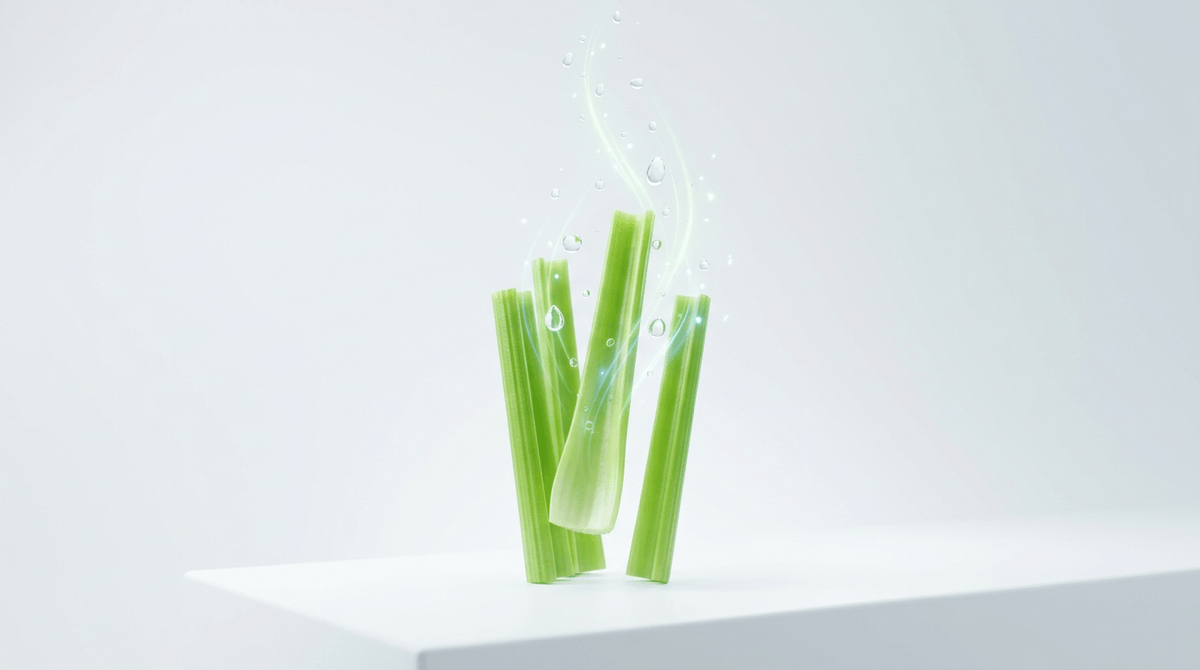
Why celery feels lighter than many snacks
It’s common to notice that a handful of celery “lands” differently than chips or a cookie—your mouth stays busy, but your stomach doesn’t feel weighed down in the same way. The crunch can also slow you down a little, which is easy to miss in the moment, especially if you’re used to snacking while distracted.
A big reason is volume. Celery is mostly water, so you get a lot of bite-size pieces for very few calories. That extra bulk can stretch the stomach wall and trigger fullness signals sooner, even though the actual energy coming in is small. Because it’s not very dense, it may feel like it “disappears” faster—fullness without the heavy after-feel.
For many people, the biggest effect shows up over days, not minutes: celery quietly replaces higher-salt, higher-fat snacks. If your usual choice is salty and you swap in something naturally low in sodium, that change can matter more than celery itself—though it can feel inconsistent at first if cravings or appetite don’t match the lighter sensation.
What’s actually inside a stalk nutritionally
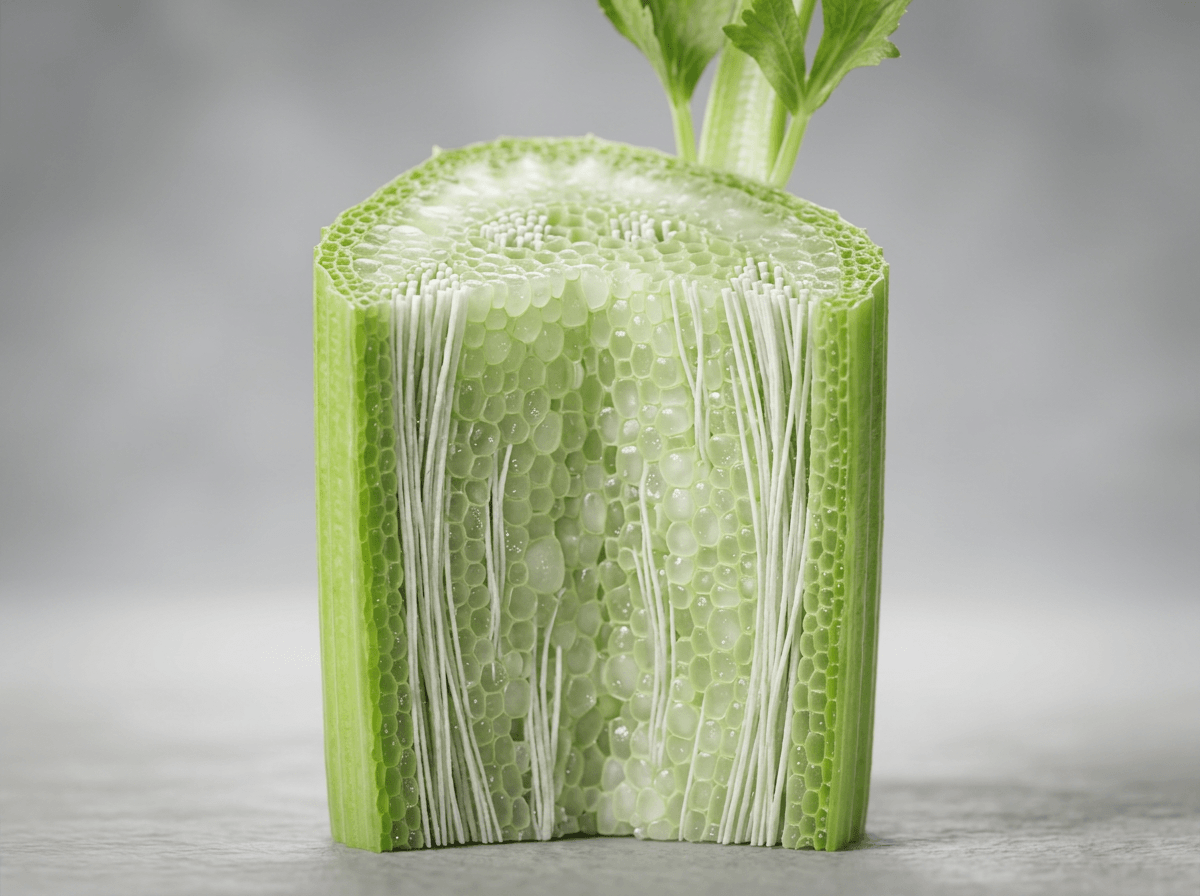
If you’ve ever eaten a few stalks and then wondered how something that “counts” as a snack can feel like almost nothing, the label explains a lot. A medium stalk is mostly water, with only a small amount of carbohydrate and a trace of protein and fat. That low energy density is why it can be easy to underestimate how much you’ve eaten by volume—and also why it may not satisfy the way a more calorie-dense snack does.
What’s left after the water is a mix of fiber and minerals in modest amounts. The fiber is mostly insoluble, which adds structure and contributes to the chew and crunch, but it isn’t a huge dose per stalk. Celery also brings some potassium, and it’s naturally low in sodium—an imbalance that can look “too simple” to matter until you realize many common crunchy snacks flip that ratio.
There are also plant compounds in the background, including natural nitrates and aromatic compounds sometimes grouped as phthalides. They’re not something you feel immediately, and the amounts can vary by growing conditions and storage, which is part of why celery’s “benefits” can seem inconsistent from one week to the next.
Hydration and volume drive fullness signals
Halfway through the bag, you might notice something a little odd: your mouth is tired of chewing, your stomach feels “filled,” and yet you’re not sure you’ve actually eaten enough to count. That mismatch can feel inconsistent, especially if you expected the same settled feeling you get after chips.
Much of that comes from simple physics. Celery carries a lot of water and air space, so it takes up room quickly once it hits the stomach. Stretch receptors in the stomach wall can send “enough for now” signals to the brain based on space, not calories, which is why fullness can show up sooner than you’d predict. But because water moves through relatively fast, that full feeling may fade earlier than it would after a denser snack.
The crunch changes the timing, too. More chewing slows the pace of eating and gives your brain more time to register what’s happening, even if your appetite doesn’t line up perfectly in the moment.
Fiber’s quiet role in steadier digestion
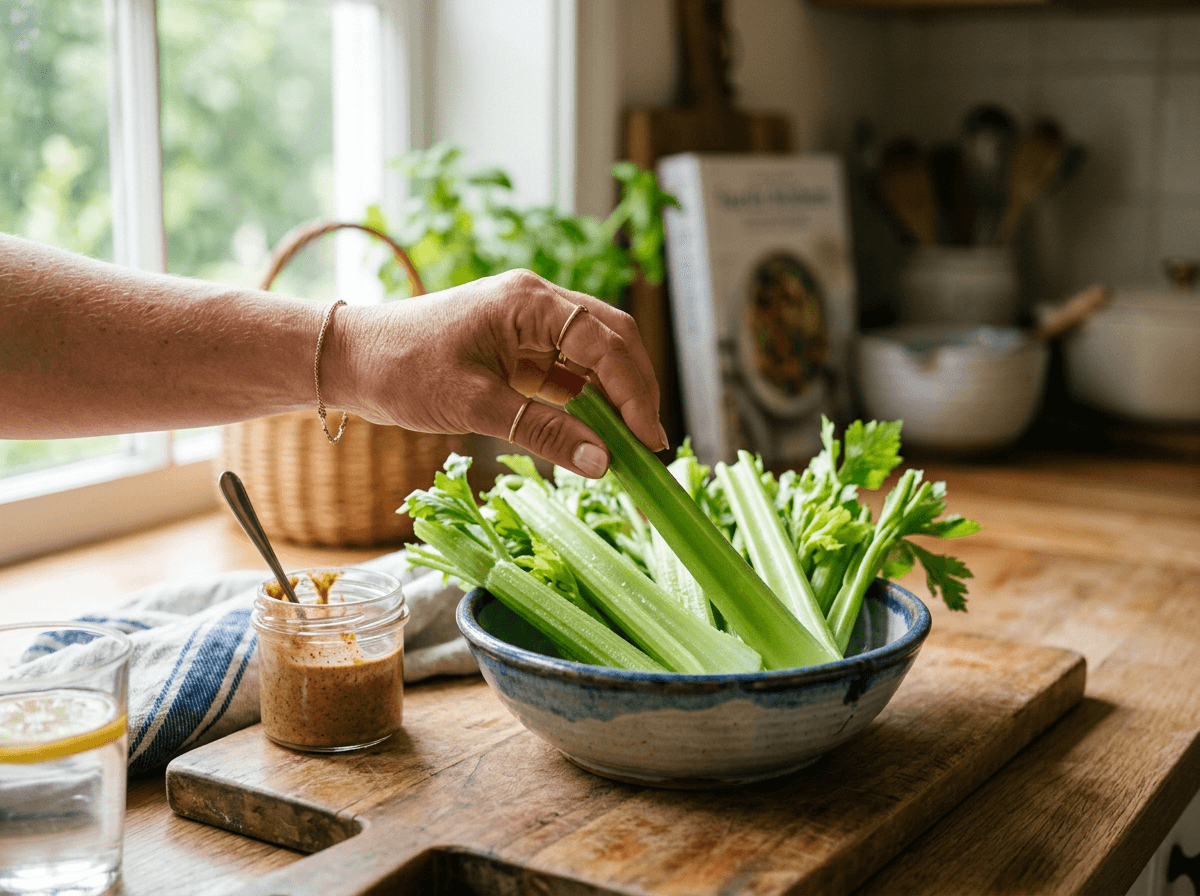
After a few days of reaching for celery more often, some people notice a different kind of change: less “swingy” digestion. Not necessarily dramatic—just fewer moments of feeling either too backed up or suddenly hungry again, even though the snack itself still feels light.
That steadier feeling can come from the way fiber adds structure to what’s moving through your gut. Celery’s fiber is mostly insoluble, which tends to hold its shape and increase stool bulk. In practical terms, it can help the intestines keep a more regular rhythm, especially when it’s replacing low-fiber snacks like chips or crackers. The catch is that celery doesn’t deliver a large fiber hit per stalk, so the effect may feel inconsistent unless it’s part of a bigger pattern across the day.
It’s also easy to misread what’s happening early on. When you increase bulky, fibrous foods without changing much else, you may notice more gas or a “too full” feeling that’s really just extra material and water moving through. If that discomfort keeps showing up, it can be a sign the swap is working mechanically—but not yet comfortably.
Blood pressure links: potassium, nitrates, phthalides
Sometimes the first “sign” people look for is subtle: a slightly less puffy feeling at the end of the day, or a home blood pressure reading that seems a little calmer one morning and then jumps back up the next. That inconsistency can make celery feel like either a secret weapon or pure filler, depending on the week.
Part of the connection is the sodium–potassium balance. Celery is naturally low in sodium and contains some potassium, and potassium helps the body handle sodium by influencing how the kidneys manage fluid. If celery is replacing salty snacks, the change in total sodium intake can matter more than the potassium in the stalk itself—and that’s why the effect often shows up over time, not right after you crunch through a few pieces.
There’s also the plant chemistry in the background. Celery contains natural nitrates, which the body can convert into nitric oxide, a molecule that helps blood vessels relax and widen a bit. Compounds often described as phthalides may also support vessel tone in small, variable ways. These amounts can vary with the celery itself, and day-to-day stress, sleep, and caffeine can easily blur any modest shift you’re trying to notice.
Antioxidants that matter more than the hype
Expectations around celery can feel a bit out of sync with the experience. It tastes clean and refreshing, yet nothing obvious signals that something protective just happened. Antioxidants don’t register in real time, and their effects tend to blend into day-to-day patterns rather than stand out after a single snack.
Celery contributes a modest mix of plant compounds, including flavonoids like apigenin and luteolin, along with small amounts of vitamin C. These support the body’s handling of oxidative byproducts from normal metabolism and higher-stress conditions. The impact is gradual and background-driven. A few stalks won’t shift much on their own, but repeated choices—especially when they replace more processed, salty foods—can change the overall balance.
The crunch can be easy to overread as a sign of “superfood” impact. A more consistent benefit comes from the basics: more chewing, higher water intake, and a snack that doesn’t bring added oils, sugars, or excess sodium along with it.
When a healthy switch creates unexpected discomfort
The first time celery becomes your default crunch, the surprise is often physical: a tight, bloated feeling, extra gas, or a stomach that feels “full” but not settled. It can be confusing because the snack is light on calories, so the discomfort may feel out of proportion to what you ate.
One reason is mechanical. Celery brings a lot of water and a firm, mostly insoluble fiber structure, and that bulk can change how quickly the stomach stretches and how the intestines push things along. If your usual snack was more refined, this sudden shift can create more fermentation and pressure as your gut bacteria and motility adjust—especially if you eat it fast or in large volumes.
When celery replaces something salty or sweet, your brain may keep scanning for the “reward” it’s used to, even while your stomach is signaling space. If discomfort or cramping keeps repeating, it’s a cue to take the pattern seriously rather than forcing the swap.